Services

Eight service lines. One standard of rigor.

Different disciplines. Same diagnostic standard. Same commitment to staying through execution. Every engagement is built from scratch around your organization.

Large professional training session
01

Change Management & Transformation Strategy

Change is a leadership challenge, and we treat it like one. First Water designs and implements change strategies that address what actually drives resistance: the mental models, competing commitments, and organizational dynamics that no announcement or training can fix on its own.

We build the sponsorship structures, stakeholder engagement plans, and adoption frameworks that move people from aware to committed. Our approach is informed by ADKAR principles and delivered through SAFe 6.0 agile coordination where programs require enterprise-wide execution across concurrent workstreams. We have led change strategies for federal agencies, school systems, corporations, and nonprofits, in environments where the stakes were high, the politics were real, and the margin for error was narrow.

Every culture engagement is a change management engagement. The methodology is the same. The context changes.

02

Strategic Planning & Execution

The distance between what leadership intends and what the organization actually does is where strategy lives or dies. We close that gap.

First Water works with senior leaders to translate strategic priorities into structured multi-year roadmaps, theory of action frameworks, and accountability systems that keep cross-functional teams aligned and on track. We build the KPI frameworks and performance dashboards, in Power BI, Tableau, or Looker Studio, that make progress visible and decisions data-driven. We stay through execution and build the operating rhythm that makes strategy a daily practice, not an annual event.

03

Structure & Resource Alignment

Most leaders treat organizational design and the budget as two separate conversations. They are the same decision. Every role is a financial commitment, and every constraint is really a question about who does what.

When revenue shifts or growth outpaces the way an organization is built, that gap shows up as blurred roles, strained teams, and decisions no one feels equipped to make. Structure & Resource Alignment is a focused advisory engagement that puts the two conversations back in the same room. First Water maps your structure against your real financial capacity, finds where the two have drifted apart, and rebuilds the roles, reporting lines, and priorities you need to deliver the mission on the budget you actually have, so leadership can size, staff, and sequence with conviction rooted in real data.

04

Organizational Development

Strategy succeeds when the structure, culture, and operating model can carry the weight of what leadership is trying to do. We design all three to do exactly that.

First Water conducts organizational assessments that surface what is actually happening, through culture climate surveys, stakeholder interviews, document review, and observational analysis, and translates findings into clear recommendations for restructuring, role clarity, and process improvement. We facilitate board governance development, lead workforce planning and capacity reviews, and support compliance-to-service transformation in regulated environments.

Operating model redesign is often the deepest part of this work. Using human-centered design, we rework how the organization actually delivers, its processes, decision rights, and ways of working, and embed a culture of adaptability and continuous learning that holds without ongoing outside support.

05

Leadership Development & Executive Coaching

First Water builds leadership capacity through sustained, evidence-based coaching engagements anchored in the Leadership Circle Profile® 360 assessment, Immunity to Change, and Cognitive Behavior Coaching frameworks.

We establish a behavioral baseline at the start of every engagement, set specific development goals, and track progress through structured pre- and post-assessments. Across the senior leaders we have coached, we have documented meaningful, measurable gains in leadership performance. Our coaching is not motivational. It is diagnostic. We also provide conflict coaching and facilitation for teams navigating interpersonal breakdowns, high-stakes transitions, and cultures where difficult conversations have been avoided too long.

06

Professional Learning Design & Facilitation

First Water designs learning experiences around how adults actually develop, building in psychological safety, reflection, application, and the kind of productive challenge that creates growth.

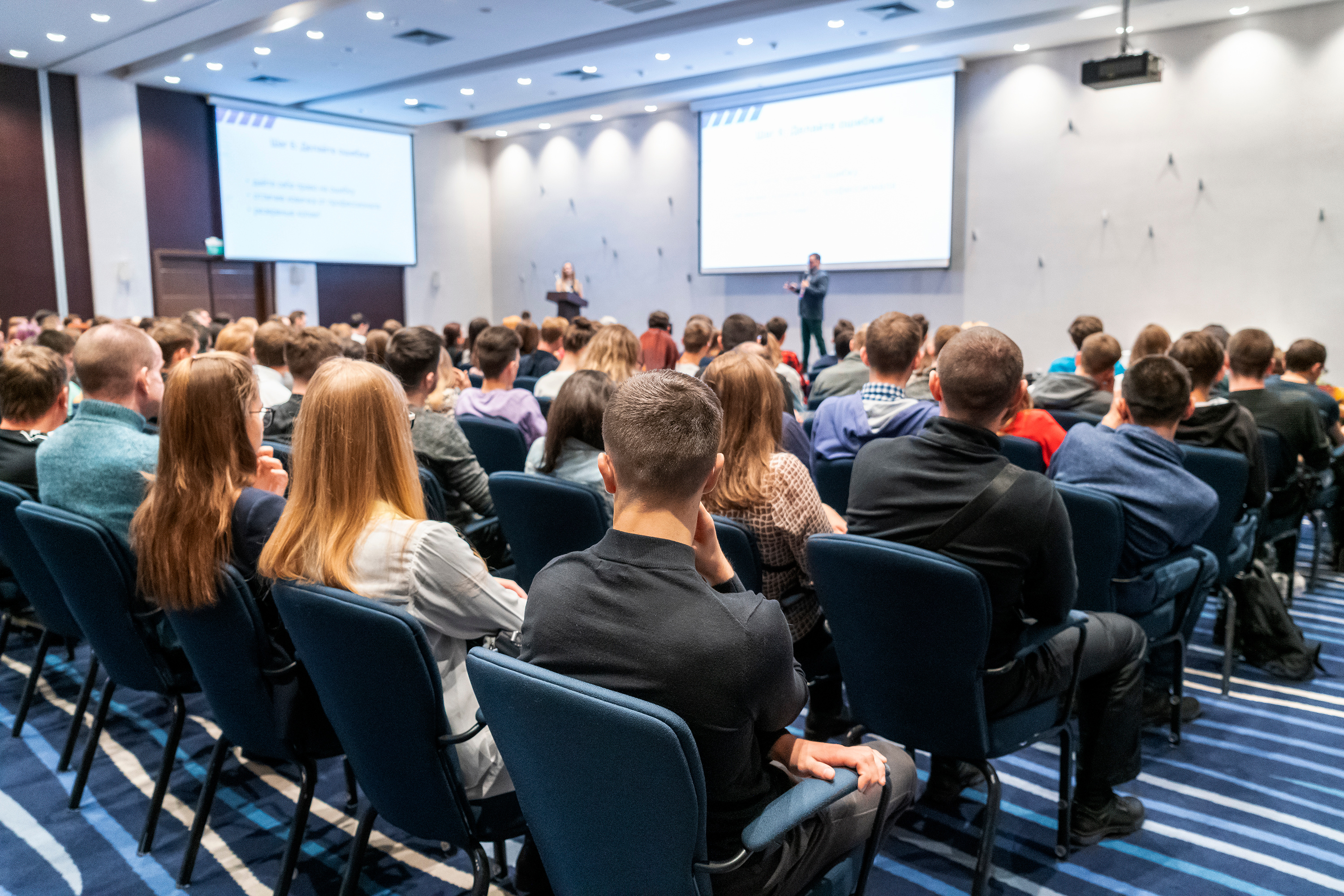
We have reached over 10,000 program participants, facilitating audiences from small executive teams to rooms of 1,800. Our co-facilitation model builds internal facilitation capacity as we work, so the learning does not stop when we leave. Every program is built from scratch, around your people.

07

Improvement Science

Improvement science is the discipline of getting the diagnosis right, then running structured, iterative cycles of inquiry that turn evidence into action. It converts stubborn problems into measurable progress.

First Water's improvement science practice is led by Anthony King, Ed.L.D., certified in the Data Wise Improvement Process at the Harvard Graduate School of Education. We work with leadership teams to build the internal infrastructure for continuous improvement: facilitated inquiry cycles, data team development, Plan-Do-Study-Act cycles, and the habit of using evidence to drive decisions rather than confirm them. This is capacity building designed to outlast the engagement, and it is particularly powerful in education and public sector organizations.

08

Program Evaluation

Program evaluation answers the question every funder, board member, and senior leader eventually asks: is this actually working? First Water designs and delivers evaluation frameworks that are honest, specific, and built to inform the decisions in front of you.

We develop logic models, define key performance indicators, build data collection strategies, and create dashboards that make findings accessible to the people who need to act on them. Work supported by our team has included evaluation of a federal oversight program covering a $21.3B grant portfolio. We also develop the internal guides and governance models that allow organizations to run their own evaluation cycles after we leave. If something is not working, our report will say so clearly.

Sample work plan
Full capabilities

The full range we deliver on.

The eight service lines above are how most engagements begin. Underneath them sits a deeper bench of capabilities we draw on as the work demands.

Strategy & Management

  • Strategic & implementation planning
  • Performance analysis, reporting & improvement
  • Business process development
  • Continuous improvement cyclesData Wise / Plan-Do-Study-Act
  • Quality management, improvement & assurance
  • Top-to-bottom reviews
  • Program evaluation & oversight
  • Communication plan development
  • Product design & roadmapping
  • Mission efficiency consulting & support
  • Stakeholder & community engagement

Organizational Development

  • Organizational readiness & gaps analysis
  • Human capital advisory & consulting
  • Workforce planning & consulting
  • Change management
  • Performance management
  • Program, project & budget management
  • Data reporting & analysis
  • Board governance
  • Human-centered design
  • Audits & culture assessments
  • Special education reviews
  • Multi-tiered systems of support

Professional Development

  • Executive coaching
  • Professional development training
  • Curriculum development
  • Instructional design
  • Culturally responsive leadership & pedagogy
  • Instructional leadership & supervision
  • Professional learning communities
  • Board governance training
  • Human-centered design training
Program evaluation in depth

Evidence you can actually act on.

Program evaluation is one of our deepest disciplines, with federal and nonprofit experience behind it. Here is how we do this work and what an engagement looks like.

How we do this work

Every evaluation is different, but the discipline behind it does not change.

Diagnostic first. We start by getting the question right. Before we measure anything, we clarify what decision the evaluation needs to inform and what would actually count as evidence.
Data-driven outcomes. We define the metrics, KPIs, and indicators that tie directly to your goals, then build the dashboards and data collection behind them so progress is measurable, not anecdotal.
Storytelling. Numbers alone rarely move an organization. We translate findings into a clear narrative leaders, funders, and boards can understand and act on, connecting what the data says to what to do next.
Honest about limits. We name biases, limitations, and risks openly. If something is not working, our reporting will say so clearly.
Designed to transfer. We build internal guides, train your staff, and leave a governance model so you can run evaluation cycles long after we are gone.

A sample work plan

Representative task areas for a program evaluation engagement. The final work plan is always co-created with your senior leaders before launch.

  1. AlignmentDefine evaluation goals and objectives, and assess readiness for change across the organization.
  2. Stakeholder interviewsConduct internal and external stakeholder interviews to gather needs and develop a model of change that maps activities to goals.
  3. Landscape scan & SWOTRun an environmental landscape scan and a SWOT analysis to understand the conditions, strengths, and risks the program operates within.
  4. Best-practice research & benchmarkingResearch high-impact organizations that have driven similar change, and benchmark performance, processes, and practices against standards, peers, and best practice.
  5. Program evaluation logic modelBuild clear inputs, activities, outputs, and short- and long-term outcomes, with dependencies, risks, and mitigations.
  6. Define impact indicatorsReview weighted options from the logic model and determine the indicators most crucial to measuring performance.
  7. Data collection strategyIdentify data capture tools, including user-friendly forms that automate collection for the dashboard.
  8. Evaluate biases & limitationsPause to investigate biases that may have influenced decisions, and name limitations and risks to success.
  9. Design, test & refine the dashboardCreate the visual data model with the sheets, formulas, progress tracker, and interactive features it needs.
  10. Storytelling & reportingTranslate the findings into a clear narrative and final report, then train staff and program owners with a governance model for ongoing evaluation.

Success Indicators include

Aligned to goals Co-developed Measurable Attainable Reportable Optimized Clear Team agreement
Fractional & Interim Leadership

Senior leadership now. Lasting capacity after.

Leadership gaps don't wait for the right hire. A role goes vacant. A transition starts. Capacity runs short. Organizations need someone who can lead the function now and build what comes next. We embed a senior leader who runs the function day-to-day and builds the internal capacity to take it over. Roles we step into include:

Executive

  • Chief Executive Officer
  • Chief Operating Officer
  • Chief of Staff
  • Chief Strategy Officer
  • Chief People Officer

Operations & Advancement

  • Director of Programming
  • Director of Operations
  • Director of Compliance
  • Director of Business Development
  • Director of External Relationships
  • Director of Grant Management
  • Director of Development

Education

  • Assistant Superintendent of Instruction
  • Director of Curriculum & Instruction
  • Director of Professional Development
  • Director of Continuous Improvement
  • Instructional Leader
Let's work together

Built from scratch, every time.

Tell us what your organization is working through. We will start with a conversation about your context.